I’m told by locals that there is more National Power, the state electricity supplier, in Freetown these days. Certainly, I can see more street lights on when we travel around some of the suburbs and downtown areas of Freetown. Where we live in Grafton the mains electricity supply has not arrived there yet. I did see some poles being wired up on the main road to the provinces about a mile away from our house, so it’s coming.
In the UK, I hardly ever give our electricity supply a second thought. I switch on the light when I need it and off when I don’t. Power cuts are rare and if an outage does occur the supply is restored very quickly. The bill is paid by Direct Debit so I don’t even have to think about that. Once a year I’ll check supplier deals on a comparison website to see if we are still getting the best deal, but apart from that, that’s it.
A National Power sales rep asked if Tom wanted to pay for poles to be erected in his street, apparently a state highway, and for a metered supply to be connected to their property. National Power is still not on all the time and you can’t rely on it to keep your fridge on and your food safe. Additionally, the voltage varies day to day and to such an extent that it can easily burn out the compressor in a fridge or freezer. Tom politely declined.
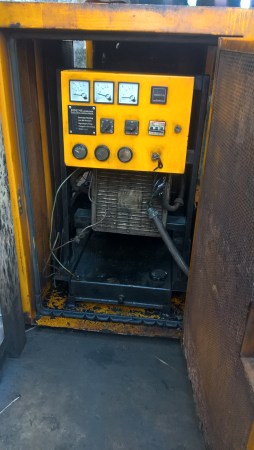
For Tom and Becky to have electricity they must intentionally plan for it to happen. Their compound is equipped with a 20 Kva diesel generator, plus a 13 Kva back up as they break down regularly, that runs from 19:00 to 07:00, seven days a week. The main generator consumes around 135 US gallons of diesel every 20 days. That costs Le 3,240,000 or £540 at current exchange rates. In addition, they run a small 6.5 Kva petrol generator during the daytime when necessary with a 3.5 Kva backup. This consumes between 20 and 25 US gallons per week costing up to Le 460,800 or £77. Their property is rented and didn’t come with the generators fitted. They had to be purchased and fitted into the compound. Spare parts can be hard to come by locally so Tom buys some when he comes to the UK for some R&R.
Fuel is purchased from a local filling station, in cash, no credit cards here. Cash comes from an exchange up town so that it has to be planned into the once a week trip to the downtown area of Freetown. Road congestion is so bad that you just can’t jump into the car and travel the 10 miles anytime you feel like it. It’s a day trip so you need to think carefully about all you need for the week ahead, cash included.
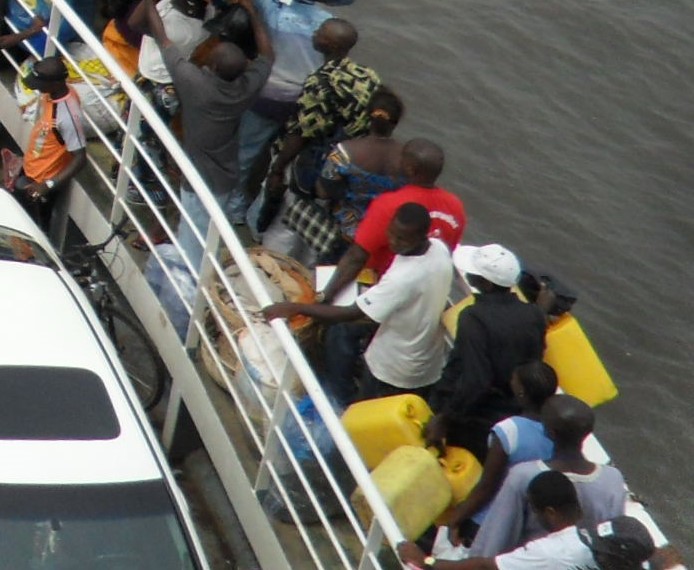
Tom will hitch up a small trailer to the 4×4 and head out with 27 ‘rubbers’, 5-gallon yellow plastic containers that people use here for fuel storage. Some will be tied down in the trailer, some will be in the boot of the car. Carrying such a large amount of fuel, in and behind the vehicle, comes with significant inherent risks. Having fuelled the diesel generator, Tom will turn around and do a similar trip for the petrol ones.
All of this activity is hidden from the teams that visit from the US and the UK as it takes place before they arrive. Like me, they just switch on the light and think nothing of it.
 Joining Hands Across the World