I first started walking in the Largs hills when I was 15 with 396 Squadron Air Training Corps. We were taken to this area for a map reading exercise, navigating between aircraft wreck sites that were to be found there. I subsequently visited these wrecks sites on another four occasions with different sets friends before I moved away from the area. I also tramped these hills with the TA where a Sergeant expressed his view that the going under foot in this area was the worst in Scotland. I wouldn’t disagree with him. Since moving away it has been over 40 years since my last visit. Despite my Sergeant’s wise words, I had forgotten just how horrible the Largs hills are to navigate after a sustained period of rain. The going under foot was very bad. I sank in the bog up to my knees on several occasions, testing the weather proofing of my boots and gaiters beyond their design limits. The weather forecast was for a fairly dry day up until 16:00 when some heavy showers could be expected. It turned out showery all-day with cold and heavy driving rain coming on at 14:30.
I set off from the A760 and headed straight for Irish Law, a 484m high hill, where a Vickers Viking G-AIVE lay.
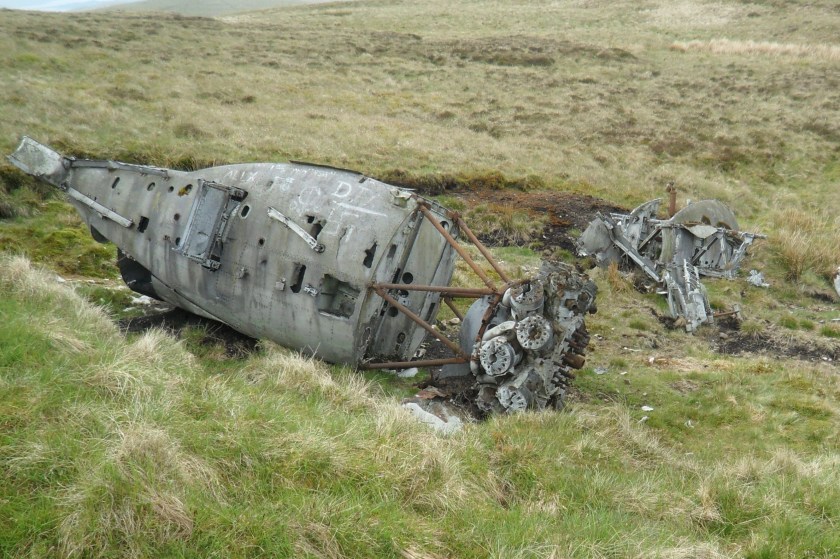
Owned and operated by British European Airways, it crashed here on the night of the 21st of April 1948, in poor weather en route from Northholt to Renfrew. All 16 passengers and 4 crew survived with few injuries.
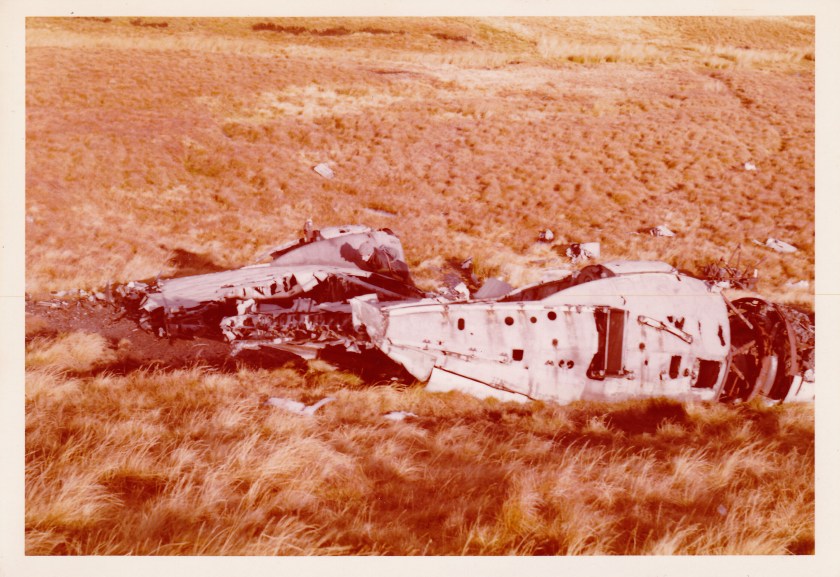
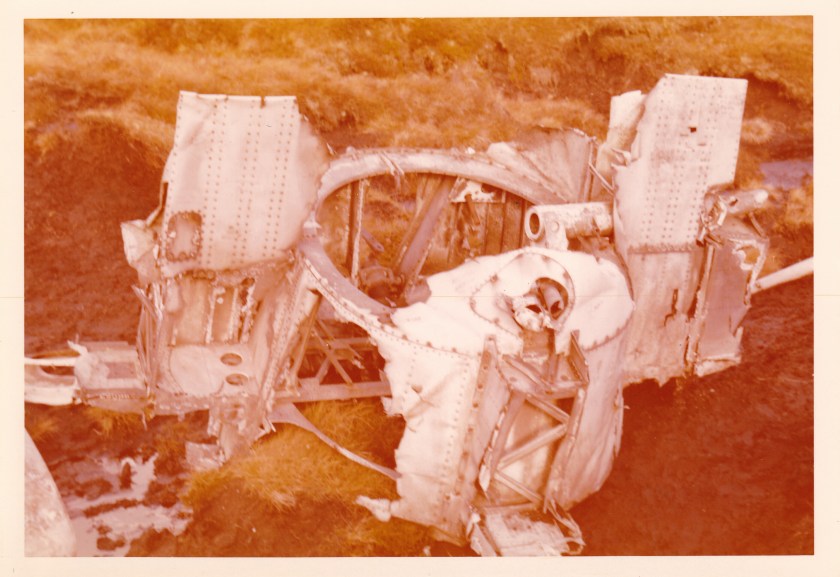
The photo above was taken around 1972 with David Quigley, where are you David?, seen here reading some of the graffiti etched on to the Port wing by some earlier wayfarers. From the top photo you can see that these two parts of the plane have been separated over the intervening years.
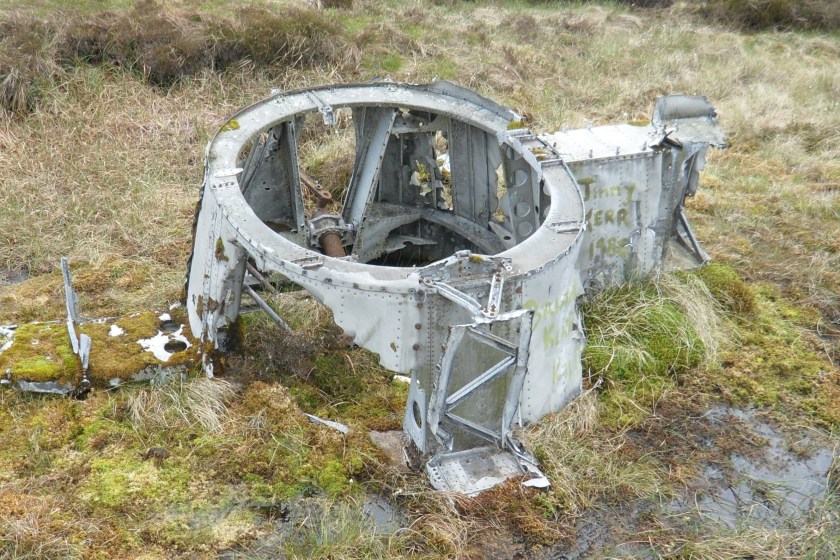
This is part of the tail cone and it lies some 20 metres ahead of the main debris field.
Comparing it now to the photo above you can see that a lot of material has been removed.
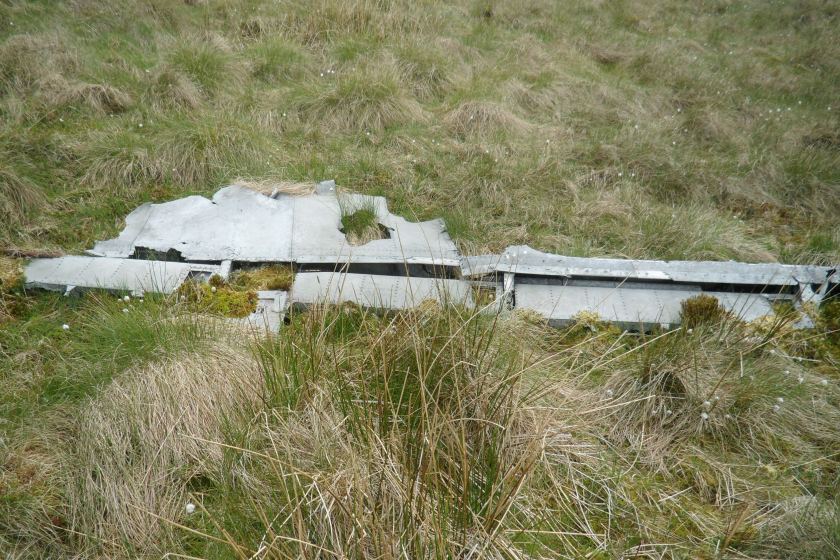
What’s left of one of the wings.
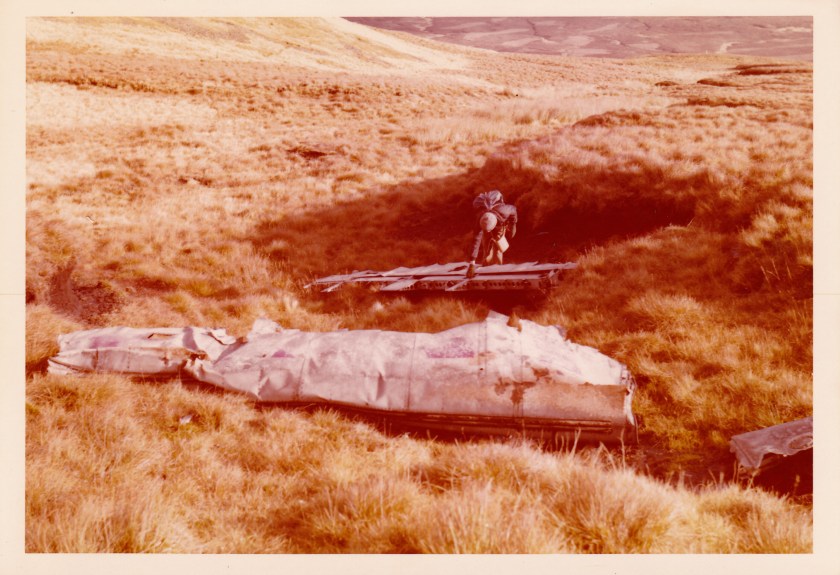
And what there used to be back in the 70’s.
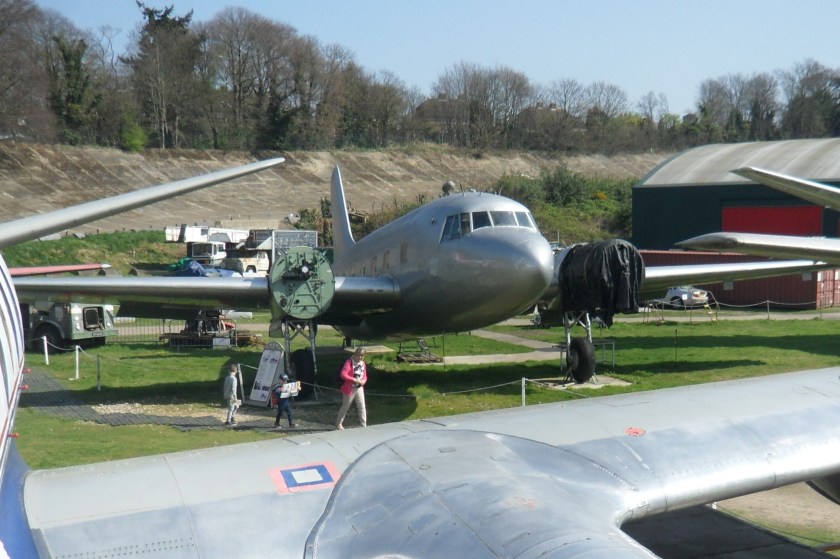
Pete Meade and myself recently visited the Brooklands Museum where this aircraft was manufactured and they have this example of the Viking on display.
Heading north to Box Law, 474m, I could see my next objective a De Havilland Devon VP969 just over 2 Km away. Operated by the Royal Navy this aircraft crashed here on the 3rd of June 1958. There were no passengers and both the Pilot and Co-pilot survived.
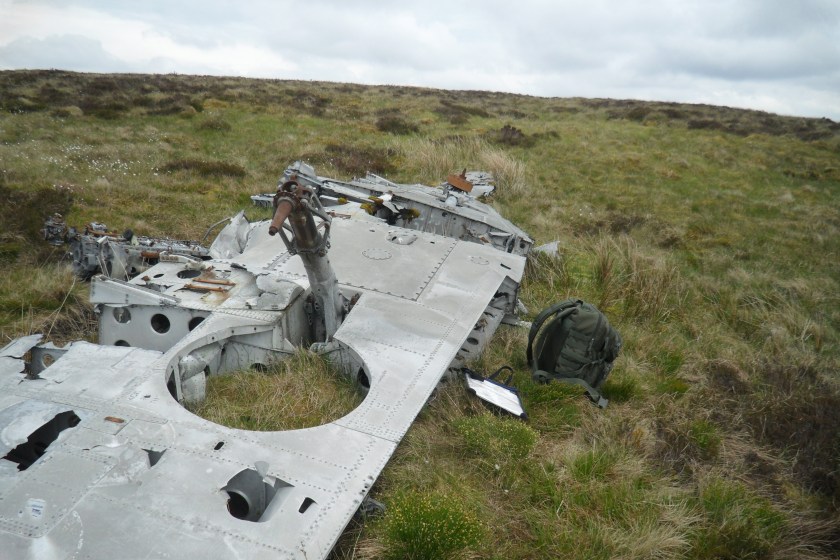
This it aircraft was en route between the Isle of Man and the Naval Air Station, HMS Sanderling that would later become Glasgow Airport. However, the wreckage was lying in a direction that would indicate it was flying away from its intended destination. This was not my memory of my previous visits to the site. On checking my earlier photos and some other web sites on this matter it is clear to me that the wings have been flipped over and the tail plane moved.
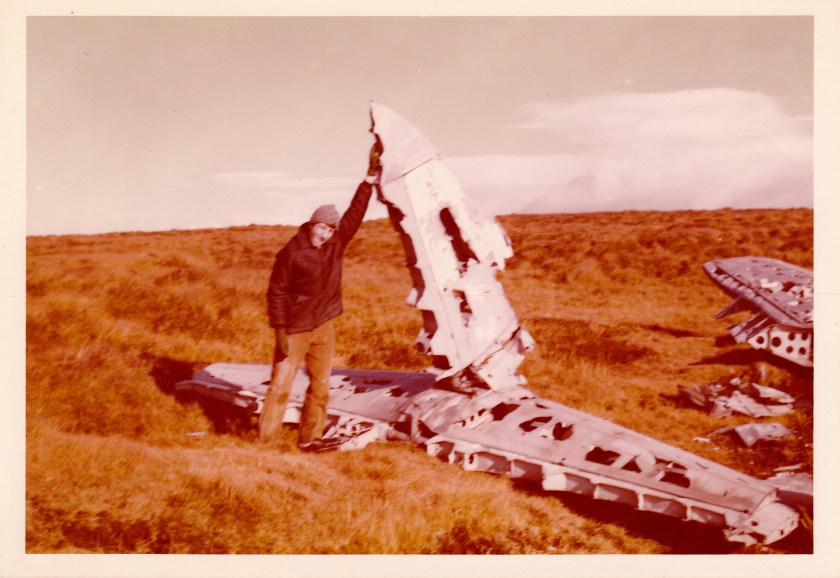
In this photo, you can see David standing against the tail that was still attached at that time.
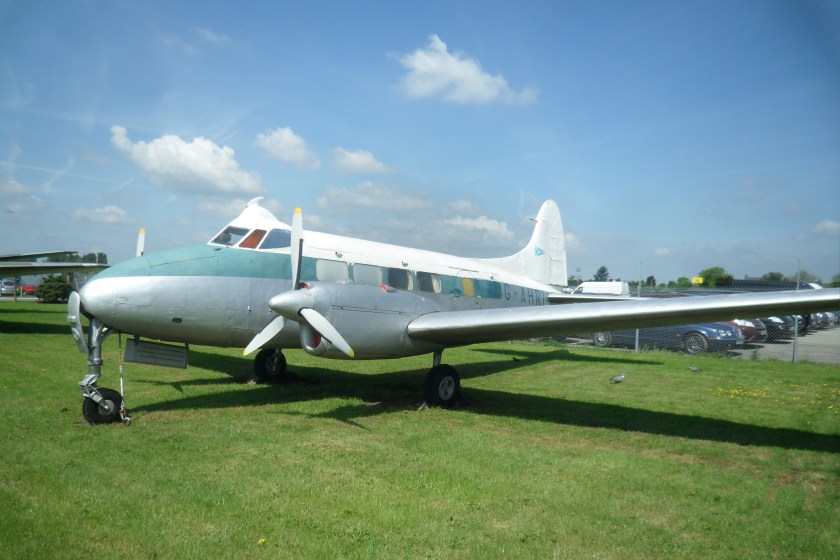
This is a civilian version of the Devon, call the Dove, photographed at the Newark Air Museum.
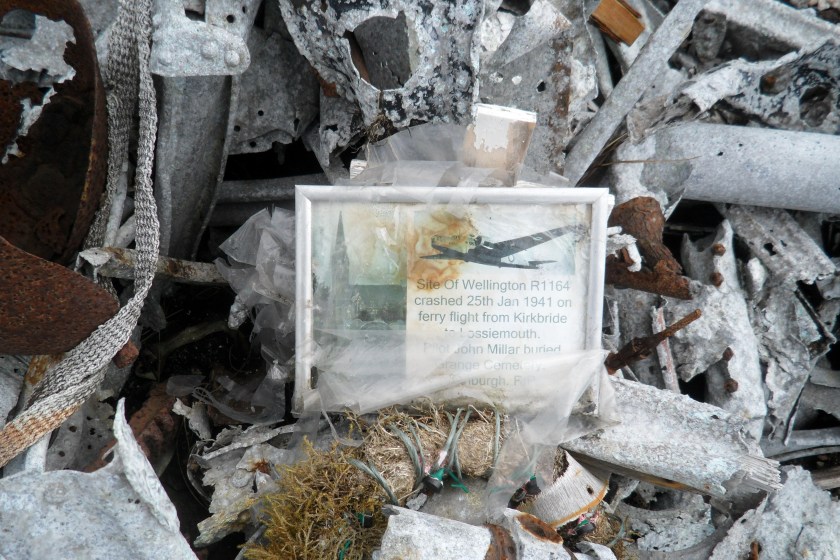
Leaving my backpack at the Devon I headed west to try and find the remains of an RAF Wellington Bomber that crashed here on the 25th of January 1941. I came across quite by accident on one of my previous trips. The first time I visited this wreck one of the propellers was still on site. Sadly now that is missing and most of the remaining small parts of wreckage has been brought together.
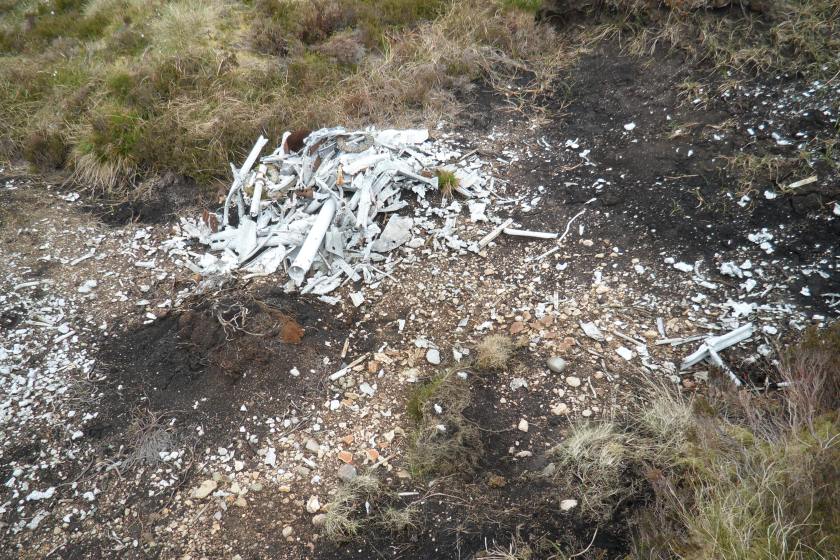
A memorial plaque and wreath have been laid there for the pilot, Flying Officer John Millar, who died in the crash. The aircraft was being ferried from RAF Kirkbride in Cumbria to RAF Lossiemouth in Morayshire. The plaque states that he is buried in Grange Cemetary, Edinburgh.
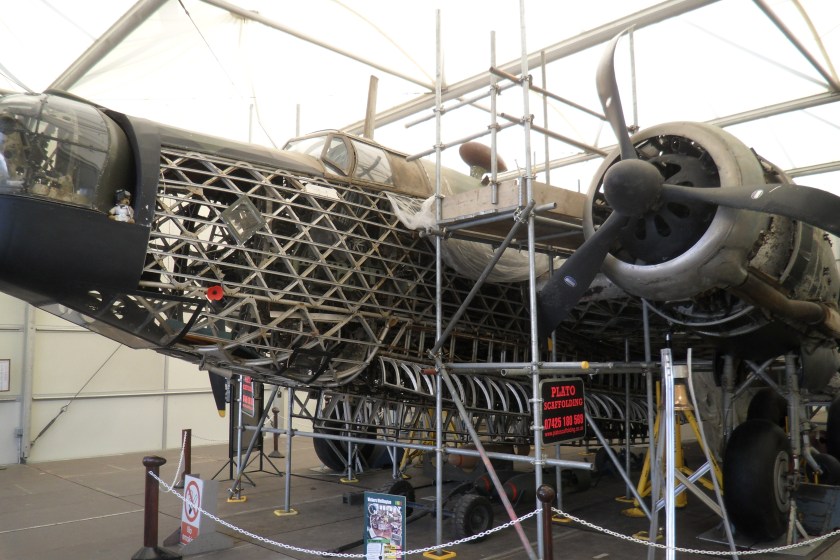
Another Wellington was recovered from Loch Ness some years ago and is under going restoration at the Brooklands Museum.
I returned to the Devon and retrived my rucksac and headed for Greenside Hill, 447m, to try and find the remains of a C47 that crashed there on the 28th of March 1956. This was a wreck site that I had never visited before and I did not have the exact grid reference of its location. By this time the weather was getting quite bad and I didn’t spend too much time looking for the remains. There is some personal family history connected to this aircraft. It was flying into Renfrew and had been chartered to fly pligrims to Lourdes in France the next day. My Mum and Dad were due to fly on that flight.
 Joining Hands Across the World